
A Timeline of The Restaurant
The hospitality industry has existed since the beginning of Western culture. People have always been forced to travel for one reason or another, which means there has always been someone there to make money from travelers. Food, a bed, shelter from the storm – these are things people have always and will always need.
Abraham’s Hospitality

Photo by vaticanus
“Looking up, he saw three men standing near him. As soon as he saw them, he ran from the entrance of the tent to greet them and, bowing to the ground, he said, `My Lords, if it please you, do not go on past your servant. Let a little water be brought; bathe your feet and recline under the tree. And let me fetch a morsel of bread that you may refresh yourselves… Abraham hastened into the tent to Sarah, and said, `Quick, three seahs of choice flour! Knead and make cakes!’ Then Abraham ran to the herd, took a calf, tender and choice, and gave it to a servant-boy, who hastened to prepare it. He took curds and milk and the calf that had been prepared and set these before them; and he waited on them under the tree as they ate.”
Genesis 18:2-8. Jewish Publication Society translation. New York: Jewish Publication Society, 1985.
The experience of leaving one’s home to have a meal somewhere for pleasure, however, is a fairly new concept, and like so many other ideas, traditions, and experiences, it began in the East long before people began doing it in the Western world. What follows is a timeline featuring some of the most important events in the evolution of restaurants.
960 to 1279 Sung Dynasty, China
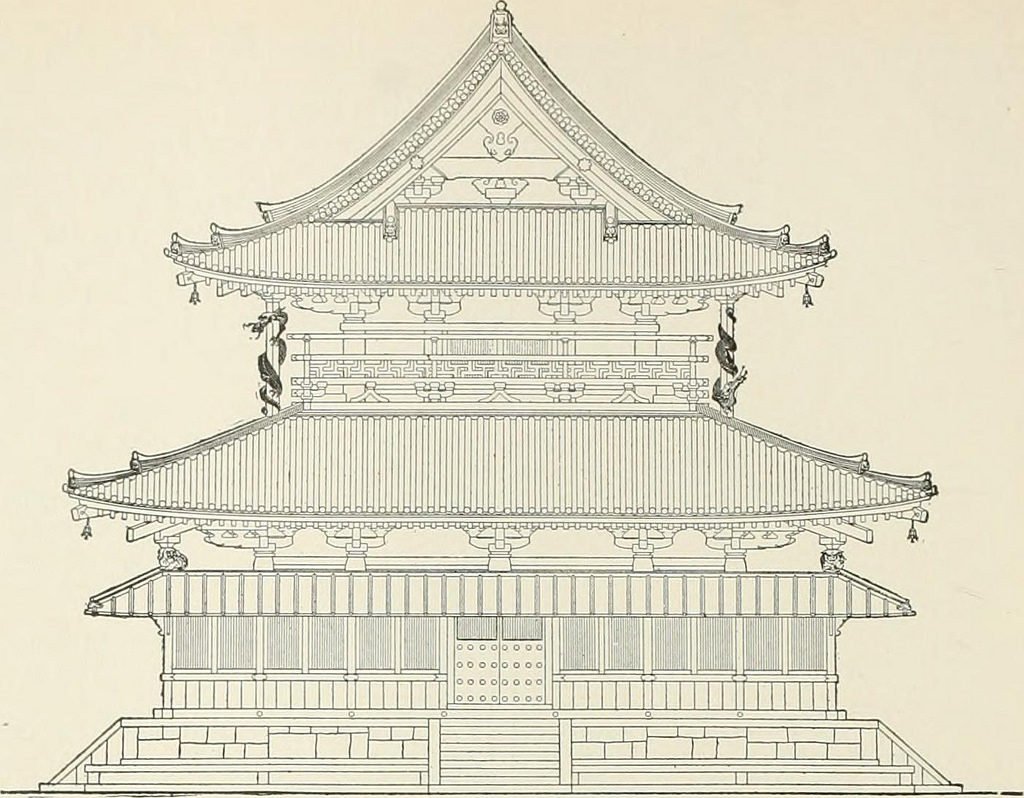
The Sung Dynasty marked a wonderful period of cultural and culinary achievement in China. The culinary achievements of the period stemmed from a new strain of rice grown in Vietnam, which was heartier and more easily produced. It also went a long way towards ending a widespread famine at the time.
Once the famine ended and people weren’t struggling to eat, they could spend time producing food to sell instead. Agricultural commerce began to thrive. Open-air markets allowed everyday people and urban cooks to buy more produce, herbs, and other ingredients than ever before.
Once people were able to easily meet their basic sustenance needs, luxury foods became popular. Sugar cane became a popular sweet, and tea went from being an indulgence of the wealthy to a staple of everyday life for all Chinese people.
Two major southeastern cities of the era, Hangchow and Kaifeng, cultivated a rich restaurant culture that was actually quite similar to our restaurants today.
The main difference, however, was that these restaurants, referred to as “wine restaurants,” were exclusively for men and were almost always associated with brothels. These wine restaurants were very high-society. They featured art from the most popular artists, had ever-changing menus, and were lavishly decorated. They also fell in and out of favor regularly with their fickle clientele.
These cities also featured a number of less esteemed restaurants in the form of tea houses and noodle shops. These businesses also catered almost exclusively to men, but they were usually day-laborers rather than the Chinese elite.
14th century England
One of the earliest references to restaurants in England can be found in the well-known Middle-English epic, The Canterbury Tales by Chaucer. In it, several road-weary travelers meet in a particular inn to share a meal. The host of the inn then proposes a storytelling contest, of which the winner will then receive a free meal, courtesy of his (or her) fellow travelers, when they make it back to the inn on their return journey.
1368 to 1644, Ming Dynasty China
People were often traveling through China in this time period, and restaurants became even more popular. It was around this time that they also began to offer takeout and cater special events at the homes of their more affluent patrons.
17th Century, America
The Colonial Tavern
Public houses were a popular attraction in England during this time period, and when English settlers came to America, they brought the idea with them. The American public houses were very similar in style and form to those in England, and they were very popular places where men, especially wealthy men, could get together for meals, drinks, and conversation. Beer was common in these houses, and the proprietors often served meals, though the patrons did not get a choice in what they were served.
1688, London
Coffeehouses and Commerce in England
London is famous for having one of the world’s first “coffeehouses.” Edward Lloyd’s coffeehouse was a popular one, and the first reference to it can be found in a very old London newspaper. The shop was located on Tower Street and served mostly maritime insurance types and merchant shipowners. They’d often meet at Lloyd’s to conduct their business, and it became known as a hot-spot for discussing and finalizing insurance transactions. A group of insurance underwriters bought it in 1771 and renamed it Lloyd’s of London.
1698 , London
Public Gatherings for Business and Pleasure
In the mid-17th century, chocolate and tea were almost unheard of in England, even so, this year saw the operation of 2,000 coffeeshops in the city of London alone.
1762, New York
The Tavern
During this period in history, catering services were not widely available. However, Samuel Fraunces opened his public house on the corner of Canal and Queen streets and was known to send regular meals over to George Washington, who lived nearby. Fun fact: A restaurant called Fraunces Tavern, still operates in this same spot today; however, it has mostly been rebuilt from the ground up.
1765 , Paris
The Word “Restaurant” Arrives
The word “restaurant” actually originated quite a bit differently than one might imagine. A soup vendor from Paris named Boulanger began selling a sheep’s foot soup called a restaurant, which literally meant “restorative soup.” A group of competing shop owners, known as traiteurs, argued that the soup was a ragout, instead, which only traiteurs were allowed to sell. A lawsuit ensued, and the judges ruled against the traiteurs, insisting the soup did not fit the category of a ragout. Boulanger continued calling his soup a restaurant, and his business improved greatly thanks to the publicity.
1782, Paris
The Restaurant Comes To The West
Another Parisian traiteur by the name of Beauvilliers had a shop called La Grande Taverne de Londres, but he decided to expand it by setting up several tables and offering a small selection of selectable menu items.
1784-1833, France
Marie-Antoine Carême
Often called the “Cook of Kings and the King of Cooks,” Marie-Antoine Carême grew up in poverty during the tumultuous French Revolution but made a name for himself as a great chef. As an adult, he traveled all over the country to cook for the wealthiest and noblest families in Europe. Some of the most famous of his clients were:
- Czar Alexander of Russia
- King George IV, when he was Prince Regent
- Talleyrand in France
- and many, many others.
He often wrote about his travels and his dishes and is known by many as the ultimate founder of French cuisine.
1789, Paris
Bastille Day
Of all the things people know about the French Revolution, one thing most people don’t realize is it is probably what brought restaurants to the common people. With the death of the wealthy elite, well-trained and incredibly skilled chefs were out of work. They began cooking for the masses instead. They began opening restaurants and cooking for anyone who could afford to pay them.
1794, New York
Coffeehouses and Commerce in America
The Tontine Coffee House was opened at the convergence of Water and Wall streets. In a very short time, it became the go-to spot for up-and-coming investors, who eventually established the New York Stock Exchange.
19th Century, Europe
Restaurant Comes of Age
The restaurant business was fully established and booming by the early 19th century, at least in the middle-class and wealthier circles. Jean Anthelme Brillat-Savarin termed the restaurant as “a convenience in the modern lifestyle” in 1825, going on to say that restaurants offered a much wider selection of meal choices than could ever have been created in one’s own kitchen.
1825, Philadelphia
The Soda Fountain
Pharmacist Elias Durand began supplying customers of his drugstore with seltzer water remedies, and the soda fountain was born.
1827, New York
America Welcomes to Fine Dining
Americans were introduced to the fine dining experience by Peter and John Delmonico. The Delmonicos opened a restaurant to serve delicious, hot meals to businessmen at lunchtime. The Delmonico’s restaurants were the gold standard in dining for almost a century.
1868, Chicago
Railroads Luxury
George Pullman, the creator of locomotive sleeper cars, decided to branch out and created dining cars, as well. These were basically mobile restaurants for wealthy travelers. They had ever-changing menus that featured local produce and trained chefs and service staff.
1872, Providence in Rhode Island
Evolution of the Diner
The first glimpse of the typical American diner came when food vendor Walter Scott began selling his food from the back of a horse-drawn buggy. This allowed him to sell more food without having to continually run back to his home for extra supplies.
1876, Topeka in Kansas
Affordable and Respectable Traveler-Dining
In Topeka, Fred Harvey opened his establishment at the railroad depot of Atchison, Topeka, and Sante Fe, providing the first affordable dining for travelers.
1890, New York
The Ultimate Opulence
Confectioner Louis Sherry opened a restaurant/hotel; after a successful eight years, he relocated to 44th and Fifth, where Sherry’s became even more lavish and upscale. Fun Fact: The New York Horseback Riding Club had their horseback dinner at Sherry’s in 1903, running up a $50,000 tab.
1893, New York
The Maître D’
The Waldorf-Astoria opened its gorgeous dining room, which was famous for being mirrored. For several years, it was managed by a man named Oscar Tschirky. Tschirky became the first high-society maître d’hôtel and set the standard for the stereotype of elbow-rubbing the famous and snubbing those considered “less than.”
1893, Chicago
An American Cafeteria is Born
John Kruger opened a self-service restaurant at the World’s Columbian Exposition, held in Chicago. It was inspired by the Swedish style of eating called a “smorgasbord.” He named it cafeteria, which translates to “coffee shop” in Spanish.
1898, New York
Cafeteria Convenience
Carrying food dishes back and forth to the tables could be quite inconvenient; therefore, Samuel and William Childs introduced the tray into self-service cafeterias, making it simpler and more convenient for patrons to transport their food.
1902, Philadelphia
Technology in the cafeteria
Despite the fact that people make a big deal about robots taking over their jobs, automated service has been around for over a century. For example, the Horn and Hardart company opened several “automats” in 1902. These were self-service restaurants where food was purchased through a system very similar to a modern-day vending machine. People put their change into the machine, and their food was dispensed to them. It was a very sanitary process.
1912, Providence in Rhode Island
Diners at the Roadside
Known as “lunch wagons” at the time, these mobile restaurants became so numerous they often blocked off city streets. A law was put into place that forced them out of traffic by 10:00 am. The proprietors, needing to serve all day to make money, began parking their wagons in deserted lots, allowing workers to visit them on their lunch and other meal breaks.
1916, Wichita in Kansas
Single Diner to Hamburger Chain
Walter Anderson opened a diner that featured that all-American favorite, hamburgers. The hamburger joint was so popular, that in 1921, Anderson takes on Edgar “Billy” Ingram as a partner, and they open a fourth establishment. These were the first White Castle restaurants.
1919, United States
18th Amendment
Prohibition went into effect January 17, 1920, putting several Gilded Age establishments out of business, making way for the rise of family-oriented restaurants, such as cafeterias. Drinkers began to patronize speakeasies, which were the foundation for the supper club fashion, a trend popular in 1933 after the repeal of Prohibition.
1925, Massachusetts
The First Restaurent Franchise
Newsstand and soda shop owner Howard Johnson’s soda shop was so well-liked, people in Cape Cod wanted a second one. Because of monetary restrictions, he was unable to open one alone. He persuaded someone to open one in his stead using his layout and plans and selling his products; the idea worked well, and by 1941, he had 150 franchises spanning from Florida all the way up to New England.
1926, Los Angeles
Novelty Road Restaurant
A hat-shaped restaurant, The Brown Derby, opened in Hollywood, starting the fad of gimmick restaurants. This restaurant was also the first to offer Cobb salad.
1929, New York
Speakeasy Turns Into Supper Club
The famous ’21’ Club opened in New York, in the same spot where it still stands today. This was the fourth opening for owners Charlie Berns and Jack Kriendler, who first opened “tea rooms” in Greenwich. The tea rooms were so popular, they had to move locations to meet the needs their growing clientele.
The first nightclub they built was ’42.’ 42 was set to be torn down in order to build Rockefeller Center; on New Year’s Eve, the owners threw a party, providing guests with axes, mallets, and crowbars to help them demolish the building. Because 21 began it’s life as an illegal establishment, it was equipped with mechanized liquor cabinets that rotated to hide liquor in case of a raid. It was never raided successfully.
1934, New York
Continental Cuisine in America
A deluxe supper club, known by the name “Rainbow Room“, opened at the Rockefeller Center. The menu featured European-inspired dishes, and the room featured a dance floor covered in flashing lights that blinked in time with the orchestra’s centerpiece, the organ.
1936, Oakland in California
Theme Restaurants
In 1936, theme restaurants were all the rage in California. Victor Bergeron owned Hinky Dinks, a beer joint, and he reopened his business in an LA hotspot with a Polynesian, tiki-theme, renaming it Trader Vic’s. The tiki room theme was so popular, Bergeron eventually opened several Trader Vic’s, soon establishing it as a well-known chain restaurant. He also created the popular drink known as a Mai Tai.
1938, Chicago
Everyone is Welcome, even VIP’s
Inspired by the Pump Room spa in Bath England, Ernest Lessing Byfield opened a similar club inside the Ambassador Hotel. He wanted to make a lavish, glamourous atmosphere that nonetheless welcomed people from all wealth and social castes.
However, he did institute a rigid seating hierarchy. Booth One was only open to the most elite of the elite, such as high-class, grade A movie stars like Marilyn Monroe. The booth would remain empty if no one with that kind of star-power visited that night. The food was presented as flamboyantly as possible; even hot dogs were delivered on flaming swords.
1939, New York
Haute Cuisine in America
In 1939, The World’s Fair came to Flushing, Queens and featured exhibits from 60 countries, including restaurants serving traditional dishes inside their tents. The most frequently visited pavilion was the French Pavilion, and its waiting list was often many weeks long. These pavilions were America’s first exposure to French chef system and cuisine, and they were largely responsible for culinary geniuses Henri Soulé and Pierre Franey’s immigrations to America.
1948, San Bernardino, California
Fast Food
Even in 1948, fast food workers weren’t always reliable. Angered at the inconsistent quality of workers at their establishments, the McDonalds brothers, Maurice and Richard, decided to reevaluate their business model. They got rid of the carhop positions and trimmed their original menu from its initial 25 items to only hamburgers, milkshakes, and fries.
Customers then had to park their cars and come into the restaurant to fetch their food. In 1952, they decided to redesign the building, adding the distinctive Golden Arches people know and love to this day. In 1954, the McDonalds brothers sold their restaurants to Ray Kroc, who took the McDonalds franchise and turned it into a multi-billion Dollar corporation.
1950s, America
Soda Fountain Culture
The 1950s were the time of the soda fountain, and an entire culture rose up around soda counters at drug stores. It became all the rage to sell drinks made of ice cream, known as floats, at drugstores; in fact, these drinks started selling better than the original water seltzer remedies created by Durand in 1825. The fifties also saw the rise of the soda-jockey.
https://www.youtube.com/watch?v=-prPrTejF8k
1972, Ithaca in New York
Social Conscience
One of the first cooperative restaurant ventures in the United States was opened by several friends who regularly gathered together to eat meals. They opened the establishment as a sort of community project, calling it the Moosewood Restaurant.
They served vegetarian meals and made a particular effort to create new dishes centered around the most traditional dishes from countries around the world. The vegetarian menu and community aspect of the restaurant aligned with and appealed to their political beliefs.
Reading List:
Food in Chinese Culture: Anthropological and Historical Perspectives by Kwang-chih Chang.
Larousse Gastronomique: The Encyclopedia of Food, Wine, and Cookery by Prosper Montagné.
America Eats Out: an Illustrated History of Restaurants, Taverns, Coffee Shops, Speakeasies, and Other Establishments That Have Fed Us for 350 Years by John F. Mariani.
From Boarding House to Bistro: the American Restaurant Then and Now by Richard Pillsbury.
