
Photo by Jason Leung
In the lively Canton provinces, friends and business associates frequently gather at bustling tea houses during mornings and early afternoons to mingle or discuss business over an array of appetizing small bites. In China, this popular activity is known as yum cha or “going to tea,” reflecting the strong connection between tea-drinking and the delightful snacks that accompany it. In the United States, however, these miniature meals are more commonly referred to as dim sum. The term dim sum, derived from Cantonese, can be translated as “dot-hearts” or heartwarming little treats.
A celebrated and essential aspect of Chinese cuisine, Dim Sum has its roots in the Cantonese regions of Southern China, specifically in Guangdong province and Hong Kong. The term “Dim Sum” translates to “touch the heart” in English, embodying its original purpose of offering small, delectable bites that both delight the heart and satiate one’s hunger.
Table of Contents
What’s on the Menu
Dim sum primarily consists of mouthwatering pastries, such as steamed or fried dumplings, stuffed buns, and noodles. However, sweet pastries, vegetables, and meats are also available. These bite-sized dishes are served in modest portions, usually with three or four items per plate, enabling diners to savor a wide array of flavors, whether they opt for a light meal or an indulgent feast. Variety is the cornerstone of dim sum, with some establishments presenting over 100 different options on particularly busy days.
The Dim Sum Experience
The way dim sum is served is truly unparalleled in Western culture. Servers expertly navigate the dining room, pushing carts brimming with diverse dishes, as patrons eagerly watch for their favorites. When a tempting plate comes into view, diners signal the server and point to their choice. The dining room is alive with the movement of carts winding through tables, animated calls for attention, and the satisfying clatter of plates.
The idea is to continuously select dishes as the meal progresses, instead of gathering all the food at once. Sweet and savory dishes are interspersed, as Chinese tradition does not dictate saving sweets for the end of a meal. Nevertheless, sweets are typically reserved for special occasions, like pauses between courses at a banquet or indulgent dim sum treats.
Yum Cha: A Social and Culinary Tradition
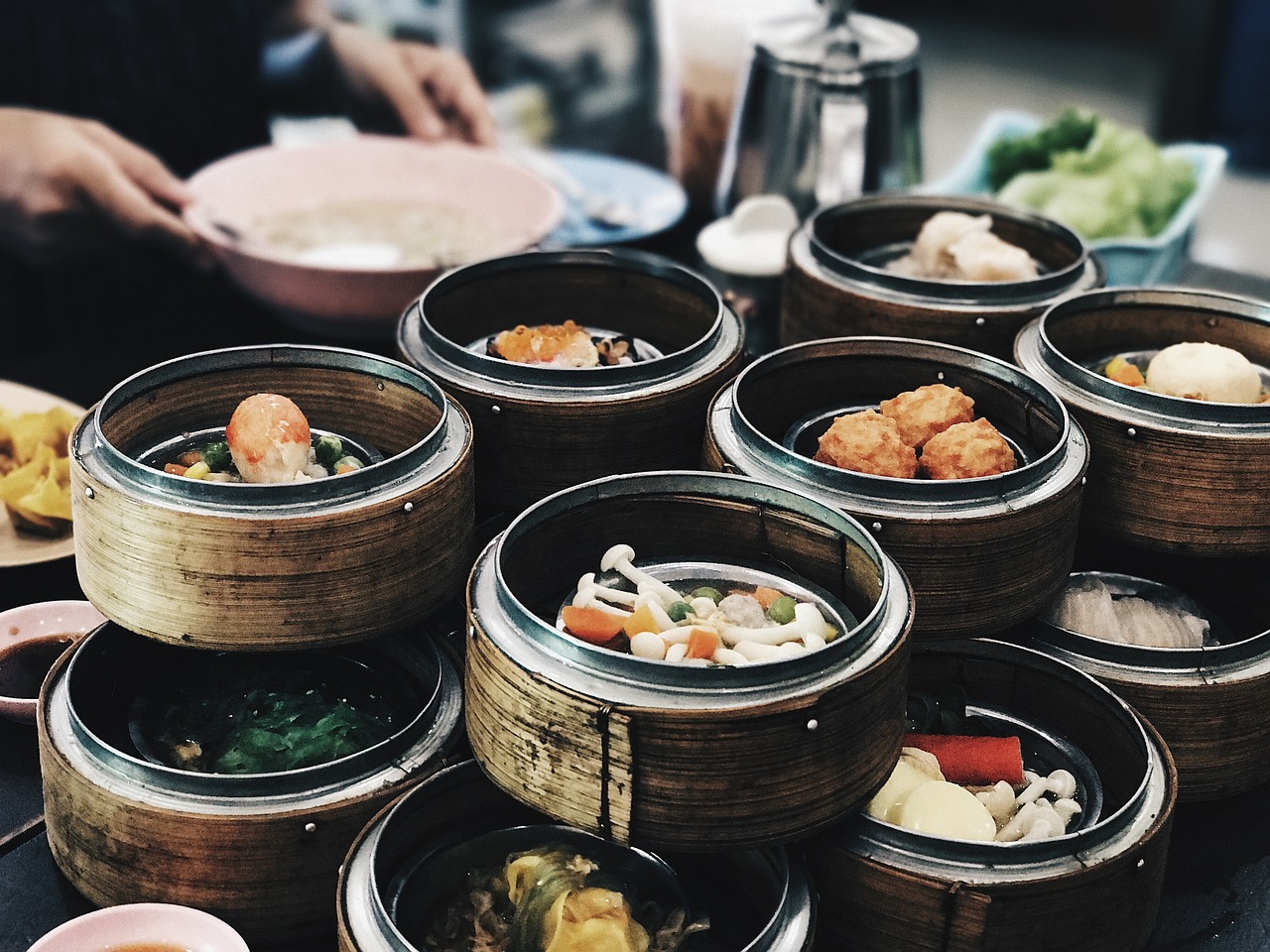
Traditionally relished during “yum cha” or Chinese tea gatherings, Dim Sum is often enjoyed as a leisurely brunch where family and friends come together to sip tea and savor these delicious morsels. Bamboo steamers frequently serve as the vessels for these bite-sized dishes, fostering a shared culinary experience among loved ones.
What’s in a Dim Sum?
The term “Dim Sum” encompasses a wide variety of bite-sized dishes, typically made with a mixture of meat, seafood, vegetables, and other ingredients. These small treats are crafted to offer a diverse range of flavors and textures, ensuring that each dish provides a unique gastronomic experience.
What is Dim Sum vs Dumplings?
While both Dim Sum and dumplings are part of Chinese cuisine, the key difference between them lies in the scope of the dishes. Dim Sum refers to an entire category of small, bite-sized portions, while dumplings are a specific type of dish within the larger Dim Sum umbrella. Dumplings typically consist of a wrapper made of dough, enclosing a filling made from meat, seafood, vegetables, or other ingredients.
What Dishes are Considered Dim Sum?
Dim Sum dishes can be divided into several categories based on their ingredients, cooking methods, and presentation. These include steamed dishes, baked or fried dishes, rice and noodle dishes, and desserts. Examples of Dim Sum dishes include Har Gow (shrimp dumplings), Siu Mai (pork and shrimp dumplings), Char Siu Bao (barbecue pork buns), Lo Mai Gai (sticky rice in lotus leaf), and egg tarts.
What’s the Difference Between Dim Sum and Dim Sim?
Although the terms “Dim Sum” and “Dim Sim” sound similar, they refer to different culinary concepts. Dim Sum is a traditional Chinese culinary practice that encompasses a wide variety of small dishes, while Dim Sim is an Australian adaptation of Dim Sum that generally features fewer dishes and often includes some fusion elements.
The Wide Array of Dim Sum Dishes
The vast and diverse array of Dim Sum dishes can be categorized based on ingredients, cooking methods, and presentation.
Steamed Dishes: The Quintessence of Dim Sum
The quintessential method for preparing Dim Sum, steamed dishes include some crowd-favorites like:
- Har Gow (shrimp dumplings): These translucent dumplings boast a filling of tender shrimp and crunchy bamboo shoots.
- Siu Mai (pork and shrimp dumplings): Open-topped dumplings stuffed with a flavorful blend of ground pork, shrimp, and mushrooms.
- Xiao Long Bao (soup dumplings): Delicate dumplings filled with a tantalizing mixture of ground pork and a gelatinous, savory broth.
Baked or Fried Dishes: Rich and Decadent Flavors
Offering richer, more decadent flavors, baked or fried dishes include:
- Char Siu Bao (barbecue pork buns): Fluffy steamed or baked buns filled with a sweet and savory barbecue pork mixture.
- Spring rolls: Crispy rolls packed with a variety of ingredients such as vegetables, shrimp, or pork.
- Wu Gok (taro dumplings): Deep-fried dumplings featuring a mashed taro exterior and a savory filling made from pork, mushrooms, and other ingredients.
Rice and Noodle Dishes: Hearty and Satisfying Complements
These heartier options complement the Dim Sum spread:
- Lo Mai Gai (sticky rice in lotus leaf): Glutinous rice filled with chicken, mushrooms, and Chinese sausage, wrapped in a lotus leaf and steamed.
- Cheung Fun (rice noodle rolls): Thin, steamed rice noodle sheets encasing ingredients such as shrimp, beef, or char siu, served with a sweet soy sauce.
Desserts: The Sweet Finale
Sweet treats that perfectly round off the Dim Sum experience include:
- Egg tarts: Petite, baked pastries with a flaky crust and a sweet, velvety egg custard filling.
- Sesame balls: Deep-fried glutinous rice balls filled with sweet red bean paste and coated in crunchy sesame seeds.
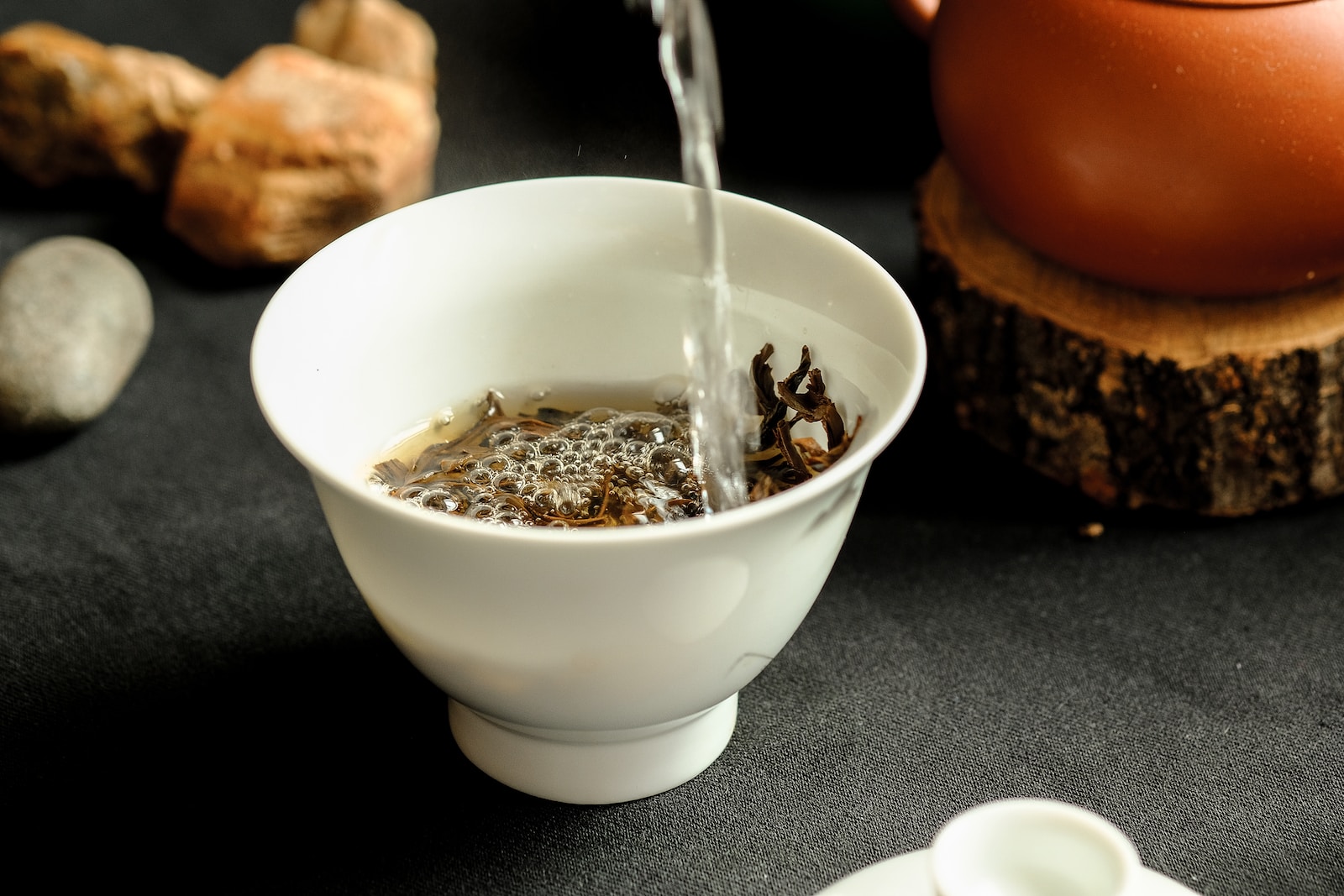
Tea: The Lifeblood of Dim Sum
These enticing dishes are accompanied by a selection of Chinese teas to cleanse the palate and aid digestion, with popular choices such as jasmine, pu-erh, oolong, and chrysanthemum tea.
The Perfect Accompaniment: Chinese Tea
The flow of tea during a dim sum meal is unending. When a teapot is empty, the customer need only leave the lid ajar, and it will be whisked away and promptly refilled. A popular story explaining this custom involves a resourceful student who hid a bird inside his teapot. As the waiter lifted the lid to refill the pot, the bird made its escape. The student, following his plan, caused an uproar, insisting that the valuable bird warranted compensation from the restaurant. After this incident, restaurants decided to wait for customers to lift the lid of an empty teapot as a signal for a refill.
The Essence of Dim Sum: A Shared Culinary Experience
Over time, Dim Sum has evolved as chefs continually experiment and introduce new dishes to cater to diverse tastes. However, the essence of Dim Sum remains unchanged: to unite people in the enjoyment of a leisurely meal and a shared culinary adventure that touches the heart.
How to Eat Dim Sum: A Comprehensive Guide to Enjoying the Chinese Culinary Tradition
Dim Sum is a beloved Chinese culinary tradition that brings family and friends together to enjoy a variety of bite-sized dishes alongside tea. This unique dining experience can be both exciting and overwhelming, especially for first-timers. This guide will walk you through the essentials of eating Dim Sum, from choosing the right dishes to understanding the etiquette involved.
Choose the Right Venue
Your Dim Sum experience begins with finding an authentic and reputable restaurant. Look for a bustling establishment that offers a wide variety of dishes, as well as carts roaming the dining room, allowing you to choose your desired items as they pass by.
Seating and Tea Selection
Once you’re seated, the first thing you’ll do is select your tea. The most popular choices include jasmine, pu-erh, oolong, and chrysanthemum tea. Your tea selection not only sets the tone for your meal but also aids in digestion and helps cleanse your palate between dishes.
Understand the Menu and Ordering Process
Dim Sum restaurants typically offer a vast array of dishes, making it essential to familiarize yourself with the menu. The dishes are divided into several categories, such as steamed, baked, fried, rice and noodle dishes, and desserts. The dishes are served in small portions, usually with three or four items per plate.
When the servers push carts loaded with various dishes through the dining room, you can flag them down and point to the items you’d like to try. Alternatively, some establishments provide a menu with checkboxes that you can mark to indicate your choices.
Use Chopsticks and Other Utensils Properly
Dim Sum is traditionally eaten using chopsticks, but you may also find small forks or spoons available for certain dishes. If you’re not comfortable using chopsticks, don’t be afraid to ask for a fork.
When using chopsticks, never use them to spear food, and avoid sticking them vertically into your food, as this resembles incense sticks used in funerals and is considered disrespectful.
Sharing is Caring
Dim Sum is a communal dining experience, with dishes meant to be shared among family and friends. When choosing dishes, consider the preferences of your dining companions and order a diverse selection of dishes to sample various flavors and textures.
Pace Yourself
With the tempting array of dishes available, it’s easy to overindulge in Dim Sum. Remember to pace yourself and savor each bite, allowing room to try a variety of dishes. Tea also plays a crucial role in helping you digest the food, so don’t forget to sip your tea throughout the meal.
Mind Your Manners
When dining in a Dim Sum restaurant, it’s essential to practice proper etiquette. This includes waiting for your turn to choose dishes from the carts, using serving spoons or chopsticks to serve food onto your plate, and avoiding double-dipping or taking more than your fair share of a dish.
Don’t Forget Dessert
Although sweet dishes can be interspersed throughout the meal, don’t forget to save room for dessert. Some popular Dim Sum desserts include egg tarts, sesame balls, and mango pudding.
Trying New Dishes
One of the best aspects of Dim Sum is the opportunity to try new and exotic dishes. Don’t be afraid to step out of your comfort zone and order something you’ve never tried before. You might discover a new favorite!
Pairing Dishes and Tea
Pairing your tea with the dishes you select can enhance your overall dining experience. For instance, jasmine tea’s floral notes complement the delicate flavors of steamed dumplings, while the robust taste of pu-erh tea balances the richness of fried or meat-based dishes.
Understanding Regional Variations
While Cantonese-style Dim Sum is the most widely recognized, there are regional variations across China, each with unique dishes and flavors. Exploring these regional specialties can add depth to your understanding and appreciation of the vast world of Dim Sum.
Making It a Social Experience
Dim Sum is best enjoyed with family and friends. Organizing a Dim Sum outing is an excellent way to catch up with loved ones, celebrate a special occasion, or introduce newcomers to this delicious tradition.
Settling the Bill
In most Dim Sum establishments, the bill is calculated based on the number of plates on your table. Each dish is assigned a specific price based on its size and complexity. Once you’ve finished your meal, simply ask for the bill, and a server will tally up your total.
Tipping Etiquette
In many Western countries, tipping is customary for good service. When dining at a Dim Sum restaurant, it’s essential to be familiar with the tipping culture in your location. In some cases, a service charge may be included in the bill. If not, a tip of 15-20% of the total bill is generally considered appropriate.
Visiting China for an Authentic Experience
While Dim Sum can be found in many countries, there’s nothing quite like enjoying it in its place of origin. If you have the opportunity to visit China, be sure to seek out authentic Dim Sum establishments and relish the flavors, atmosphere, and cultural experience that can only be found in the heart of China.
Now You’re Ready to Go Eat Dim Sum!
Eating Dim Sum is a delightful experience that combines delicious flavors, a lively atmosphere, and a shared culinary journey. With this guide, you’ll be well-prepared to navigate your next Dim Sum adventure and fully enjoy this delightful Chinese tradition.
With this comprehensive guide to eating Dim Sum, you’re now ready to embark on a flavorful journey through one of China’s most cherished culinary traditions. Keep these tips in mind as you explore new dishes, share memorable moments with loved ones, and develop a deeper appreciation for the art of Dim Sum.
The Ritual of Dim Sum, or, Why I Love Chicken Feet
by Melissa Clark
I cannot remember the first time I ever ate dim sum, but I can remember the first time I ate chicken feet, boiled in the kosher soup my grandmother made for Friday night dinner. They were spread out on a china plate, pale and bloated next to the border of tiny pink rosebuds. It never occurred to me not to partake. There was no surrounding taboo, no disgust at consuming bird feet. I just ate them, and they were good: soft, fatty, and salty, the perfect child’s food…as much a game as they were a dinner.
First, I bit the center pad off the foot, which detached in a sinewy lump. That was the prime morsel, the fillet mignon of chicken feet. Then I nibbled the cartilage running up the leg. The toes, which were the most fun, went last, one claw at time. As daintily as an eight-year-old might manage, I spat out the bones. By the time I went through this elaborate technique with each foot (usually two or three), dinner was over, and I was excused from eating stringy pot-roast over the protests of my grandmother, who, though legally blind, could somehow still see the uneaten slabs of meat on my plate.
Friday night dinners were abandoned when my grandmother died; I was twelve. Since my parents didn’t make chicken soup with feet, I didn’t have my favorite dish again until college, when my family discovered the pleasures of dim sum.
We started going for dim sum for convenience. Chinatown was a perfect halfway point between Flatbush (in Brooklyn), where my parents live, and Morningside Heights (on the Upper West Side of Manhattan), where I went to school. Since as a college student I certainly wasn’t going to waste a weekend night having dinner with my parents, a weekend breakfast of dim sum seemed just right
And so the ritual began. About one Sunday a month I woke to my alarm at 8:30, and rode the subway down to Canal Street to meet my parents for breakfast. While in China dim sum is mostly thought of as a tea time meal, or snack, in New York’s Chinatown, the crowds start early. By 11:00 in the morning you cannot get a seat, and it remains crowded until at least 3:00. My parents insisted that the freshest and best dim sum was to be had early in the morning, so we always met around 10:00, finishing before the crowds descended.
Having dim sum became the time I spent with my family, and it remains so to this day. It was at dim sum that I introduced my parents to my boyfriends, putting them through what I called “trial by dim sum” to see if they could stomach spicy pork tripe, salt-fried squid, or beef dumplings before noon. I fell in love with my ex-husband as I watched him nibble the web between stewed duck’s feet and eat the heads off shrimp. Years later, I broke the news of the divorce to my parents while poking at fried taro cakes with the chopsticks, unable to eat.
Fortunately, a loss of appetite is the exception to my dim sum experiences, which is important since the food never stops. At dim sum, the dishes come quickly in what seems like a never ending succession: deep-fried crab balls, tripe, congee, green scallion dumplings, shrimp rice noodles, fried eggplant, snails in black bean sauce, mussels with chilies, and soft, slightly sweet pork buns — a favorite with friends who would rather be at brunch, but whom I drag to dim sum.
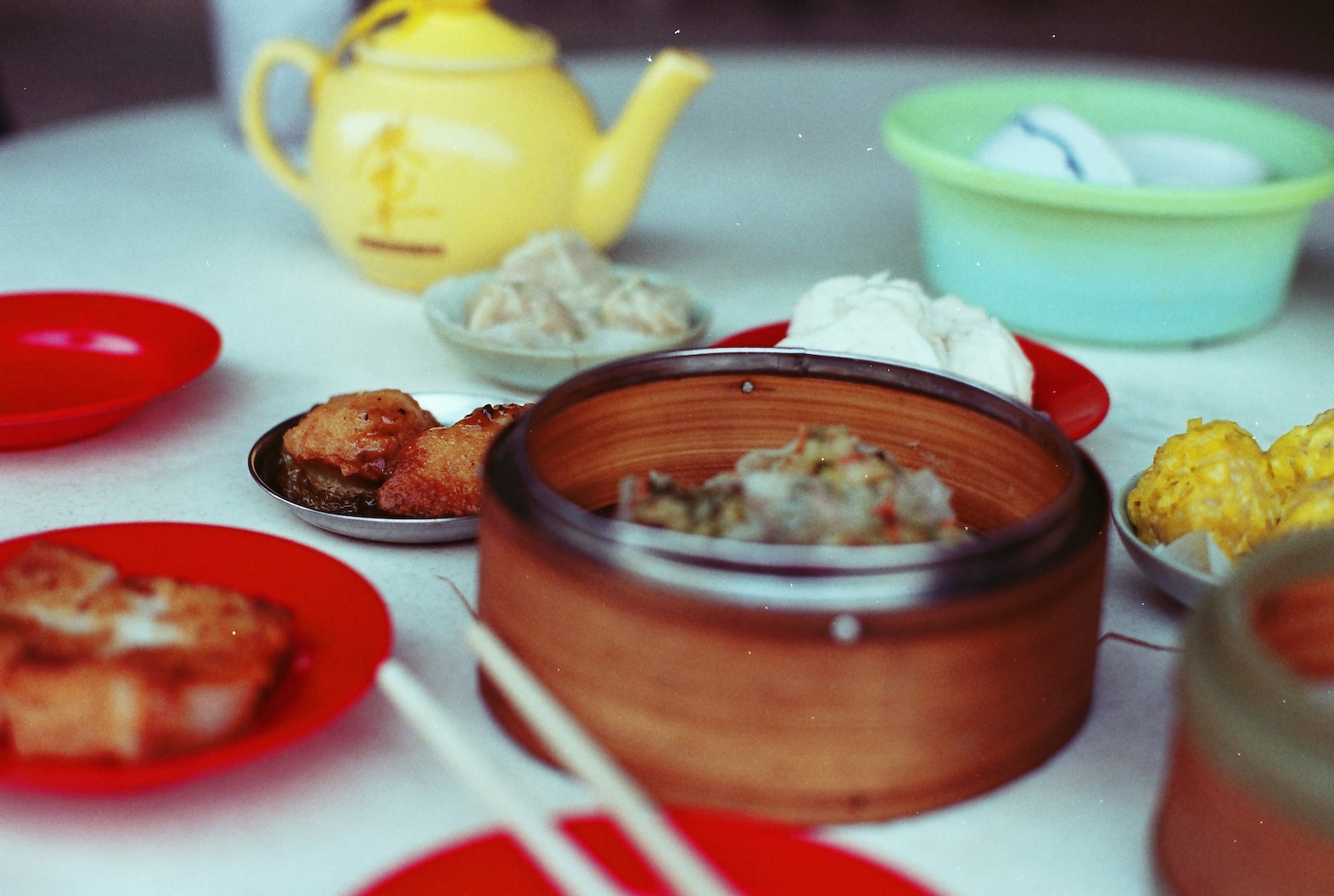
You see, we like to go with as many people as possible, so we can sample a wide variety of little dishes as they pass on steel carts, pushed by uniformed women who announce their cargo in Chinese as they go from table to table. Sometimes, the women walk quickly by our table, certain that we (as non-Asians) wouldn’t like the food they were offering, like chicken feet. It always surprises them when I call for the feet, served, not pale and bloated like at my grandmother’s house, but rich and brown and braised in a spicy sauce.
I still eat them according to the technique I developed as a child, which I hope to be able to teach to my children during dim sum one day. Of course when they grow up, they may abandon dim sum in favor of some other ritual. Like Friday night dinner. Luckily, the technique will still serve them well.
A Comprehensive List of Popular Dim Sum Dishes
Bean Curd Skin Rolls (San Juk Guen)
A very thin wrapper made of dried bean curd, rolled around a meat filling into a cylindrical shape. The roll is deep-fried, and then steamed, which gives it a characteristic, wrinkled appearance.
Congee (Chuk)
A thick rice soup with a variety of savory ingredients added. Among the many popular additions are peanuts, dried or raw fish, gingko nuts, and ginger. Sometimes the congee must be ordered separately from the food brought on carts.
Curried Beef Pastries
Flaky pastry, resembling French puff pastry, wrapped around a curry-spiced beef filling to form a crescent, then deep-fried.
Custard Tarts (Daan Tart)
Tiny tart shells filled with sweet egg custard.
Drunken Chicken
A marinated whole chicken, steamed and then soaked in dry sherry or Chinese shao-shing wine for at least a day. Cut into bite-size pieces and served cold.
Fried Fish Balls (Jar Yue Yuen)
Bite-size balls of white-fleshed fish, deep-fried.
Hot Mustard Greens (Szechwan Chung Tsai)
Mustard greens stir-fried in peanut oil, flavored with scallion and ginger.
Lotus Leaf Rice (Nor Mei Gai)
Sticky rice with a mixed ingredient filling that might contain chestnut or hard-boiled egg, as well as chicken, pork, or sausage. Enough rice for two people or more is wrapped in a lotus leaf, forming a rectangular packet, then steamed.
Pork Sausage Buns (Lop Cheung Bao)
A square of yeast dough wrapped around a Chinese sausage in the same way that westerners make pigs-in-a-blanket, then steamed.
Pork Spareribs
Marinated spareribs cut into bite-size pieces and either steamed (seejup pai gwut) or glazed and barbequed (siu pai gwut).
Pot Stickers (War Teep)
Round wonton wrappers folded into a crescent or triangular shape around a meat or vegetable filling. They are lightly pan-fried on one side, then steamed, then pan-fried again until golden.
Rice Noodle Rolls (Cheung Fun)
Large, flat rice noodles rolled around meat or shrimp filling and steamed.
Scallion Pancakes
A dense, wheat-flour dough with chopped scallions kneaded in, rolled into pancake-shaped disks, and pan-fried. The pancakes are cut into wedges before serving.
Sesame Seed Balls (Jian Dui)
A traditional for Chinese New Years sweet made of rice dough filled with red bean paste, rolled in sesame seeds, and deep-fried. Because it resembles a tangerine–the Chinese word for which sounds like the word for “luck”–both tangerines and sesame seed balls are associated with luck.
Spring Rolls (Cheun Guen)
A traditional dish for the New Year, named “spring rolls” after the time of year. They are made by rolling a paper-thin egg and flour wrapper into a cylindrical shape around a meat and vegetable filling, and then deep-frying. In Cantonese, “spring” and “egg” have a similar sound, which accounts for the fact that some people call them egg rolls.
Steamed Barbequed Pork Buns (Char Siu Bao)
Yeasted wheat dough wrapped around a barbequed pork filling and steamed. Steamed buns are made with a variety of other fillings, including chicken, lotus bean paste, custard, and chestnut paste. There is also a version that is baked instead of steamed.
Steamed Meat Dumplings(Siu Mai)
The name of these very popular steamed dumplings, siu mai, means “cook and sell.” They are made by pressing a thin, round egg-and-flour wrapper around a bite-size ball of meat filling, usually pork, leaving the filling exposed at the top. The shape has been compared to little flower pots. One elaboration on the form is the four-color dumpling (sae sik siu mai). This involves pleating the wrapper at the top, so that there are four holes, each of which is filled with a different colored garnish.
Stuffed Crab Claws (Yeung Hai Keem)
For these, the snapper is used as a handle. A portion of shell is removed from the meaty end, leaving the meat attached. Shrimp and crab paste are then pressed around the claw meat, and the whole is dipped in flour and crumbs, then deep-fried.
Tea Eggs
Hard-boiled eggs with their shells cracked, but not removed, are brought to a boil in a mixture of tea, soy sauce, and spices. After being cooked in this bath, the shells are removed. The marinade colors the egg in a beautiful crackled pattern.
Wontons
Wontons are made by folding meat or vegetable filling in a square flour and egg wrapper. They are usually deep-fried when served as dim sum, although they are also often simmered and served in soup, along with other noodles.
The History of Dim Sum: A Culinary Tradition Spanning Centuries
Dim Sum, the delightful Cantonese culinary tradition, has captured hearts and appetites worldwide. But did you know that its history spans over a thousand years? Let’s embark on a journey through time to uncover the rich history of Dim Sum, from its humble beginnings as a roadside snack to its evolution into a globally celebrated culinary experience.
The Origins of Dim Sum
Dim Sum’s origins can be traced back to the ancient Silk Road, where weary travelers would stop at teahouses to rest and rejuvenate. These teahouses offered an array of small, delicious bites to accompany their tea, catering to the varying tastes of travelers from different regions. These bite-sized snacks were the precursors to the Dim Sum we know and love today.
The term “Dim Sum” itself translates to “touch the heart” in English, which reflects its initial purpose – to serve small, delectable morsels that delight the heart and satisfy hunger.
The Evolution of Dim Sum
Over time, Dim Sum evolved from a simple roadside snack to a more sophisticated culinary experience. During the Song Dynasty (960-1279), Dim Sum became increasingly popular among the Chinese aristocracy, who would gather in teahouses to engage in leisurely conversation and enjoy the art of tea pairing with their food.
In the 19th century, during the Qing Dynasty, Dim Sum began to gain even more popularity. The bustling city of Guangzhou, in the Guangdong province, became the epicenter of Dim Sum culture. Teahouses throughout the city started to offer a wide variety of Dim Sum dishes, catering to both locals and visitors alike.
The Cantonese diaspora that took place in the late 19th and early 20th centuries helped spread Dim Sum beyond China’s borders. As Cantonese immigrants settled in various countries, they brought their culinary traditions with them, introducing Dim Sum to new audiences and cultures.
Dim Sum Today: A Global Culinary Phenomenon
Today, Dim Sum is enjoyed by millions of people around the world. From bustling restaurants in Hong Kong and Guangzhou to trendy eateries in New York and London, the art of Dim Sum has transcended cultural boundaries and become a global culinary phenomenon.
In recent years, there has been a resurgence of interest in traditional Dim Sum techniques and recipes, as well as a growing curiosity about regional variations. Chefs from different parts of China and beyond are now experimenting with new ingredients, flavors, and presentation styles, resulting in an ever-evolving and dynamic culinary landscape.
Dim Sum remains a social affair, often enjoyed during “yum cha,” which is a Chinese tea gathering or brunch. Families and friends gather to drink tea, share dishes, and engage in lively conversation, honoring the centuries-old tradition of communal dining.
Key Dim Sum Dishes Through the Ages
While Dim Sum has evolved over the years, some classic dishes have stood the test of time. These include:
- Har Gow (shrimp dumplings): Delicate, translucent dumplings filled with shrimp and bamboo shoots, first introduced during the 18th century.
- Siu Mai (pork and shrimp dumplings): Open-topped dumplings filled with a mixture of ground pork, shrimp, and mushrooms, dating back to the Song Dynasty.
- Char Siu Bao (barbecue pork buns): Fluffy, steamed or baked buns filled with sweet and savory barbecue pork, believed to have originated in the 19th century.
The rich history of Dim Sum is a testament to the enduring appeal of this beloved culinary tradition. With its roots in ancient China and its ever-evolving nature, Dim Sum continues to touch the hearts of diners worldwide, inviting them to share a leisurely meal and create lasting memories.
The Future of Dim Sum
As our global palate continues to expand, so too will the world of Dim Sum. Chefs and food enthusiasts are constantly pushing the boundaries of this culinary art form, incorporating new flavors, ingredients, and techniques while honoring the rich history and traditions that have shaped Dim Sum.
In recent years, we have seen the emergence of fusion Dim Sum, which combines traditional Chinese techniques with flavors from other cuisines, such as Japanese, Mexican, and even French. This innovation demonstrates the adaptability and versatility of Dim Sum, allowing it to continually evolve and captivate new generations of food lovers.
Dim Sum is also becoming more accessible and inclusive, with a growing number of restaurants offering vegetarian and vegan options, ensuring that everyone can partake in this delightful culinary experience.
Preserving the Art of Dim Sum
While Dim Sum continues to evolve and adapt to the tastes of an increasingly global audience, it is crucial to preserve the traditional techniques, recipes, and rituals that form the backbone of this culinary art form. This involves not only honoring the age-old customs and practices associated with Dim Sum preparation and consumption but also passing on this knowledge to future generations.
Dim Sum chefs, who often undergo years of rigorous training, must continue to hone their craft and educate aspiring chefs in the art of creating these delicate morsels. Additionally, the importance of the social aspect of the Dim Sum experience must not be overlooked, as it fosters a sense of community and togetherness.
In conclusion, the history of Dim Sum is a fascinating journey through time, reflecting the culinary evolution and cultural exchange that has taken place over centuries. As we continue to embrace and celebrate this cherished tradition, we can look forward to the exciting innovations and developments that will shape the future of Dim Sum, while ensuring that its rich history remains alive and cherished for generations to come.
