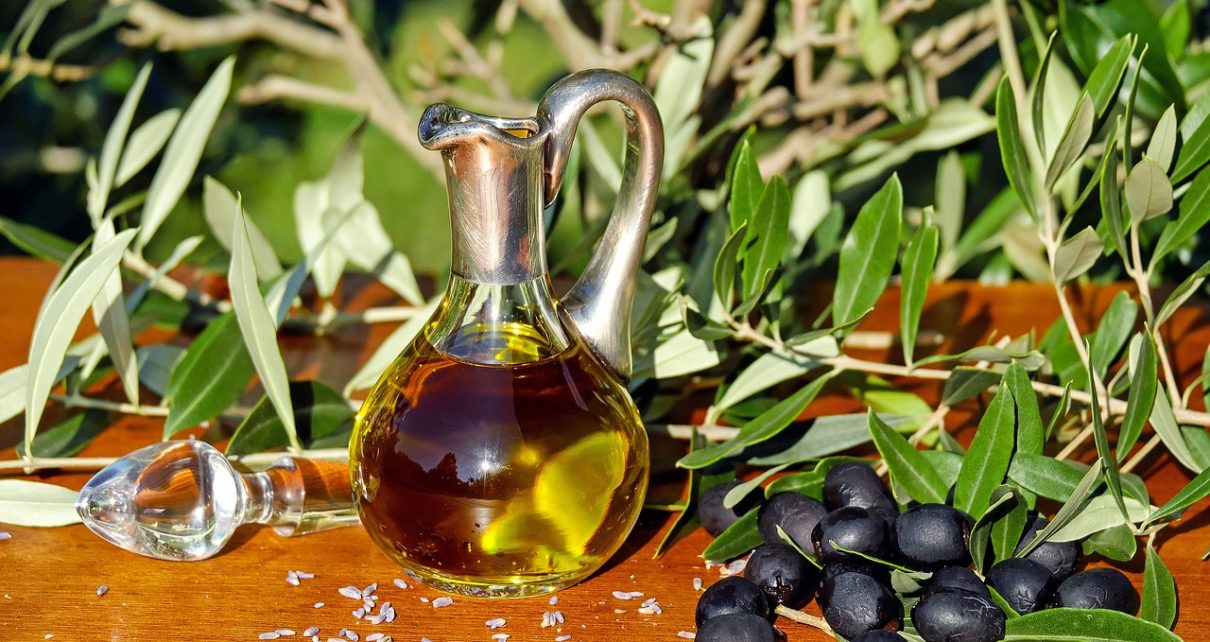
Photo by lukasbieri
Flavors of the Mediterranean
The Mediterranean is the deep, blue heart that gives life to the countries that surround her. To speak of “Mediterranean Cooking” — to make one language describe the couscous and dried fruit of Morocco, an Egyptian breakfast of ful, cool yogurt soup from Syria, Greek octopus salads, Italian prosciuttos, Niçoise pissaladières, and Catalan seafood stews — may seem a fool’s errand. However, the various countries around the sea share more than a beach.
From a western perspective, control of the world began with control of the Mediterranean, and thus it has been the seat of empires for millennia. The many powers that have ruled over large parts of the Mediterranean range from the Phoenicians to Alexander; the Romans to the Arabs; the Turks to the Venetians. This long history of imperial colonization, not to mention that of international trade, has rendered a deeply shared culture and agriculture among the Mediterranean countries.
The Mediterranean can be crudely divided into three culinary regions:
- North African (especially Morocco)
- Eastern Mediterranean (Egypt, Greece, Israel, Lebanon, Syria, and Turkey)
- Southern European (Italy, France, Spain).
Wine and herbs are central to Southern European cuisine, while spices intricately and boldly flavor North African foods.
The climate and terrain are constant throughout the region. Dry, hot summers give way to lovely, cool winters. The soil is dry, the light clear and white. Even the plants wear a protective dusting of white which gives much of the landscape a softened outline of pastel green, limned only by the severe blue sky from above and the bright blue water below.
Food is integral to the effusive hospitality which is imperative everywhere in the region and has been since ancient days when Abraham ran to slaughter a calf for the Lord, and Odysseus embarked on his famous house-tour of the Mediterranean. Flavors are robust and clear, unfettered by complicated sauces and heavy dollops of cream and butter. Home cooking is dominant as hautes cuisines bow before the traditional genius of the home and hearth.
Odysseus in Search of Hospitality
“We looked across at the land of the Cyclopes, and they were near by, and we saw their smoke and heard sheep and goats bleating. But when the sun went down and the sacred darkness came over, then we lay down to sleep along the break of the seashore; but when the young Dawn showed again with her rosy fingers, then I held an assembly and spoke forth before all: `The rest of you, who are my eager companions, wait here, while I, with my own ship and companions that are in it, go and find out about these people, and learn what they are, whether they are savage and violent, and without justice, or hospitable to strangers and with minds that are godly.'”
The Odyssey of Homer, translated by Richard Lattimore, lines 166-176. New York: Harper & Row, 1965.
The land’s bounty, nurtured by the gentle climate, is reflected in the primary role vegetables play in dishes throughout the region. Onions, garlic, and tomatoes, surrounded by olive oil, begin many dishes. Eggplants abound, as do squashes, peppers, mushrooms, cucumbers, artichokes, okra, and various greens and lettuces. Legumes too are ubiquitous: lentils, chickpeas, fava beans in Egypt, green beans in France, white kidney beans in Tuscany. Fresh herbs include rosemary, basil, cilantro, parsley, mint, dill, fennel, and oregano.
Though the Mediterranean is increasingly fished-out and polluted, seafood remains at the core of the cooking heritage. All manner of shellfish erupt magnificently from soups, stews, and pastas. Anchovies, fresh and cured, are widely eaten, as are various white-fleshed fish like sole, flounder, and grouper.
Other fish served in the region include swordfish, monkfish, eel, cuttlefish, squid, and octopus. Smaller animals, like lamb, goats, sheep, pork, rabbit, and fowl, provide most of the meat. Sheep and goats give forth dairy for rich yogurts and cheeses. Beef, however, is rare in Mediterranean cuisine, for the land cannot support large herds.
How the people cook and eat (whether over open flame or in ovens, whether they drink wine or tea with meals) depends greatly on the country.
Mediterranean Terrain
Olive groves, fig trees, and vineyards are the hallmarks of the Mediterranean shores. Trees, like olive, whose roots reach deep enough to find water thrive on the dry terrain. Orchards produce a variety of crops, such as almonds, walnuts, lemons, and the apricots and plums that join the candied and dried fruits in open-air Arab markets. The staple grain is wheat: semolina is ground into the flour that makes Italian pasta, the couscous of North Africa, and the eastern Mediterranean bulgar. Rice is also common — long-grain in most regions except Italy and Spain where shorter, more glutinous varieties, such as arborio, are used for paella and risotto.

Moroccan Cooking
Morocco, the culinary star of North Africa, is the doorway between Europe and Africa. Much imperial and trade influence has been filtered through her and blended into her culture. Unlike the herb-based cooking across the sea to the north, Moroccan cooking is characterized by rich spices.
Cumin, coriander, saffron, chiles, dried ginger, cinnamon, and paprika are on the cook’s shelf, and in her mortar. Harissa, a paste of garlic, chiles, olive oil, and salt, makes for firey dishes that stand out among the milder foods that are more the Mediterranean norm.
Ras el hanout (which means head of the shop) names a dried spice mixture that combines anywhere from 10 to 100 spices. Each vendor has his own secret recipe (hence the name), and no two are exactly alike.
Couscous, granular semolina, is central to Morrocan cuisine and is often cooked with spices, vegetables, nuts, and raisins. It makes a meal in itself or is topped with rich stews and roasted meats.
Lamb is a principal meat — Moroccan roasted lamb is cooked until tender enough to be pulled apart and eaten with the fingers. It is often topped with raisin and onion sauces, or even an apricot puree.
Meat and fish can be grilled, stewed, or cooked in an earthenware tagine (the name for both the pot and the dish). Savory foods are enhanced with fruits, dried and fresh — apricots, dates, figs, and raisins, to name a few. Lemons preserved in a salt-lemon juice mixture bring a unique face to many Moroccan chicken and pigeon dishes.
Nuts are prominent; pine nuts, almonds, and pistachios show up in all sorts of unexpected places. Moroccan sweets are rich and dense confections of cinnamon, almond, and fruit perfumes that are rolled in filo dough, soaked in honey, and stirred into puddings.
Some Dishes From Morocco
Bistteeya, Basteela, or Pastilla (Layered Pigeon or Chicken Pie)
This rich sweet pie is built with many layers of the thin pancakes called Warka. Filo may be substituted, as it is nearly impossible to replicate those slim, griddle wonders. The meat is mixed with eggs, herbs, spices and almonds, and is cooked on the stove top, then topped with a sugar icing and cinnamon.
Chakchouka (Tunisian Eggs)
This is a lunch or light meal made in one pan. Peppers, garlic, cumin and tomatoes are cooked with harissa and olive oil, then eggs are fried gently among the cooked vegetables.
Ferakh Maamer (Spring Chicken with Couscous Stuffing)
Young chickens are stuffed with a sweet couscous stuffing, enhanced with almonds, raisins, orange water, and sugar. The birds are then simmered slowly in a large casserole in a sauce of honey, onion, garlic, ginger, cinnamon, and saffron.
Tagine Barrogog bis Basela (Lamb Tagine with Prunes)
Lamb is simmered slowly with onion, garlic, ginger, saffron and parsley, to which are added prunes, cinnamon, honey, and orange blossom water.
Kaab el Ghzal (Gazelle’s Horns)
“Gazelle’s Horns” are an almond-filled pastry scented with orange.
Eastern Mediterranean Cooking
Food in this part of the Mediterranean, here including Syria (Aleppo is the culinary capital of the area), Lebanon, Israel, Egypt, Greece, and Turkey, always anticipates the arrival of guests. Prepared in a way that is fresh and mild, the food is often served room temperature and so, it can be shared easily, especially in the form of small dishes known as mezze.
Distinctive flavorings include pomegranate sauces, pepper spreads, walnut flour (particularly in Syria), ground pistachios and mint. Yogurt and white cheese like feta, halumi, or the Israeli lebanah, are used in soups and sauces or eaten alone with olive oil, fresh tomatoes, and cucumbers.
Olives and olive oil are pervasive. Chickpeas, fava beans (or ful, pronounced fool), and lentils are found in soups and stews. As in the rest of the Mediterranean, eggplant is in everything. It is the basis for the many ratatouille-like salads and it is stuffed (if any food item can be stuffed, you will find it so in the eastern Mediterranean).
Rice and meat, with perhaps tomatoes and pine nuts added for texture, make up a common stuffing for vegetables, grape leaves, and other meats. Kibbeh, which takes a slightly different name in each country, is a stuffed, oval-shaped meatball. Its shell is made out of a bulgar wheat and ground meat mix, and its stuffing is seasoned ground meat. Kibbeh is often deep-fried. It is also cooked in yogurt, boiled as a dumpling in soups, steamed, pan-fried, and even eaten raw. There are many variations of kibbeh, but the classic is made with lamb. Kebabs — marinated meats, fish, and vegetables which are cooked on a skewer over an open flame — are another well-known preparation.Kufta, seasoned ground meat, is also cooked on a skewer. The kufta kebab is then served over rice, vegetables, or in pita bread with yogurt and tahini sauce.
Turkish Cooking
Turkish food shares a great deal with its neighbors to the east, and has, since the great Ottoman Empire, exerted a strong cultural sway over the region. It supplements the local love affair with yogurt, lamb (virtually synonymous with “meat” in Turkey), and eggplant with legumes, fresh dill and mint, sumac, and allspice. Desserts are rich and sweet.
Mezze – The Welcoming Dish
The Mediterranean tradition of hospitality is brought to life in the Middle East through the vivid flavors of mezze, tasty appetizers presented to guests — who are always expected and always welcome. As people sit together, they nosh on any one of hundreds of these small dishes that mark the Middle Eastern dining experience.
Mezze can be as simple as a bowl of olives or pickles or as involved as stuffed and deep-fried phylo “cigarettes.” Often as many as a dozen mezze accompany drinks, precede a meal, or grace an afternoon coffee klatch.
Hummus (ground chick peas and tahini), baba ghanoosh (ground eggplant, garlic, and tahini), and tabbouleh (bulgar with fresh herbs, tomatoes, lemons, and olive oil) are well-known in the States but are just the tip of the mezze-iceberg.
Mezze dishes are not a distinct category of food, though. Many dishes that are served as mezze, such as red pepper salad and rolled eggplants, can be included in the main course of a meal.
Some Dishes of the Eastern Mediterranean
Circassian Chicken (Syria)
There are many regional variants of this slow-cooked chicken, but all share a toasted walnut flour and allspice sauce, touched with saffron, onion, and garlic, and drizzled with peppery walnut oil.
Dolma (pan-Middle Eastern)
Dolma are stuffed vine leaves, and they are enjoyed throughout the Middle East. In general, hot dolmas are stuffed with meat and cold dolmas are vegetarian.
Ful Medames (Fava Bean Porridge) (Egypt)
This is the standard breakfast meal for the standard Egyptian: fava beans are stewed with ground coriander, cumin, garlic, and lemon, then topped with any number of things such as hard-cooked egg, fresh cilantro, olive oil, or raw vegetables.
Imam Bayildi (Turkey)
Stories of the origin of this dish’s name abound. They range from a Turkish priest (Imam) fainting with pleasure after eating these stuffed eggplants served by his wife to the Imam fainting after hearing how much they cost. Imam Bayildi are eggplants stuffed with tomatoes onions, garlic, and parsley and served cold.
Kibbeh with Glazed Carrots and Pomegranate (Syria)
Here lamb kibbeh (oval-shaped meat balls) are stuffed with a yogurt filling, and set to cook in a rich lamb and pomegranate stew.
Konafa or Kadaif (Syria and Lebanon)
Konafa, a spaghetti-like dough, is browned with butter and served over a sweet cheese filling. The whole is drizzled with sugar syrup scented with orange-flower water and pistachio nuts.
Musakhan (Syria)
For this dish, chicken is double-marinated. First it is placed in a mixture of lemon juice, sumac, nutmeg, cinnamon, and black pepper; and then onions, olive oil and chicken stock are added. The roasted meat is served with a garnish of toasted pine nuts.
An Egyptian Market
“Yasir usually began work early in the morning, not long after the sunrise prayers and, depending on the flow of customers, he worked through till the midday prayers, when he went home to eat with his father. On Thursdays, however, his day was interrupted by the souk: he would close his shop for the morning, and with his ticket-book under his arm he would go out and plunge into the crowd of people swirling past his ancestor’s tomb.
Soon his white turban would be lost in the flood of color that poured through the market-place on Thursdays: the flashing red of the butcher’s tarpaulin, the clothsellers’ bolts of parrot-green, scarlet and azure, the fish glittering on plastic sheets and the great black umbrella that hung slantwise over the man who repaired stoves. On other days the dun shades of the village’s mud walls seemed thirsty for a touch of color; Thursday mornings were the moments when that need was abundantly and extravagantly slaked.
The professional traders and vendors were usually the first to set up their stalls. They would begin to arrive early in the morning in their little donkey-carts, the fishmongers, the butchers, the fruit-sellers, the cloth merchants, the watchmaker and a score of others of less determinate callings. The amateurs would follow a little later, women for the most part, swathed heavily in black, carrying wicker baskets loaded with tomatoes, carrots and cauliflowers, depending on the season.
The moment they set foot in the market-place they would begin to call out greetings to their friends, to cousins from other villages and sisters who had married into faraway hamlets; they would spread out little sheets of plastic in the dust and pile them high with vegetables or fruit or whatever it was that they had gathered on their plots that morning and then, squatting behind their heaped wares, they would revive the innumerable interrupted relationship the market sustained from week to passing week.”
From In an Antique Land: History in the Guise of a Traveler’s Tale, by Amitav Ghosh. New York: Vintage Departures, 1994.
Southern European Cooking
Italy, France, Spain
Much as the French may protest, many things — such as indigenous ingredients — unite southern French, Spanish and Italian cooking with each other and to the rest of the Mediterranean. Unlike the butter-based cuisine of northern France, or the goose and pork fat of the German-influenced east, southern France, like her neighbors, cooks with olive oil.
These countries use wine and herbs (rosemary, thyme, basil, bay laurel, parsley, and sage) to flavor food, more than the spices used in North African cooking. Tomatoes and garlic are regnant. Other distinctive flavors include saffron, mustard, anise, capers, olives, anchovies, and pine nuts. Food is savory, not sweet, and, unlike North African cooking to the south, fruits are rarely used when cooking a main course.
Seafood is, of course, a central part of the diet; shellfish and squid are lightly enhanced by lemon juice and olive oil, or simmered into tomato-rich stews and topped with a crusty crouton or a spoonful of pungent aioli (garlic-infused mayonnaise).
Unlike the Muslims and Jews to the east, the Christians of southern Europe eat pork. And since pork is easy to raise and produces a great proportion of meat to feed (and a pig will eat anything), it is a mainstay of the area’s cuisine. Breads are another feature of the region, and with breads come ovens, and with ovens, roasting.
This distinguishes Europe from the tendency to stove-top cooking that marks much eastern Mediterranean and North African cuisine. Fowl of all kinds grace the table. The Mediterranean is a great migration spot for northern European birds heading to warmer Africa for the winter, so domesticated chicken and geese are seasonally supplemented by pheasant, grouse, partridge, and duck.
As in the Middle East, appetizers are popular and multifarious. In this region, there is a great fondness for foods that go with wine and talk: tapas in Spain, crudités in Provence, elaborate antipasti in Italy. The entire Mediterranean, and this part in particular, produces delicious soups — just about anything can go into the pottage, from fruit and wine to tripe. Legumes are widely eaten, especially white cannelloni beans, but also peas, fava beans and string beans. All kinds of vegetables can be found in the markets, and the cook allows the fresh taste of the food to come forth from each dish.
https://www.youtube.com/watch?v=7kOdtftLpjM

One thought on “Mediterranean Cuisine”
Comments are closed.