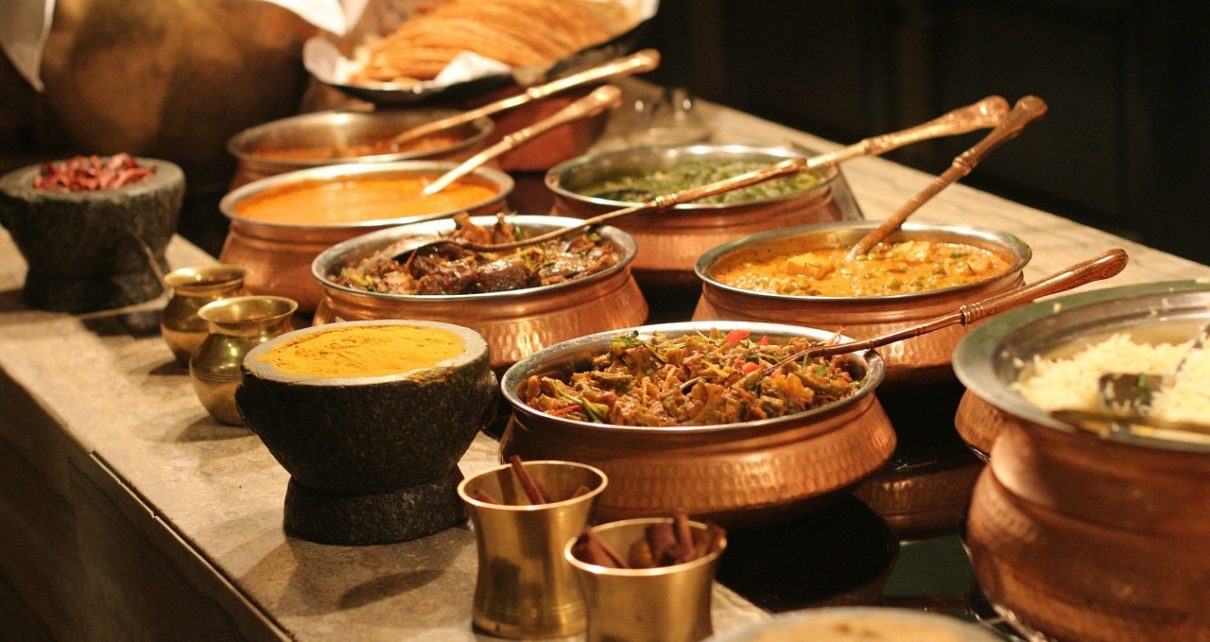
Photo by PublicDomainPictures
India is huge; its geography and climate ranges from the landlocked mountains around Kashmir, to the fertile Ganges river valley, to the arid Deccan plateau, to the steamy coastal regions around Goa and Madras. Her cooking is as varied as her land, and so, with apologies to the illimitable reality, here is a discussion of some of the elements and aesthetics common to “Indian food.”
India’s people are Hindu, Jain, Buddhist, Sikh, Moslem, Zoroastrian, and Jewish. The gulfs between her classes are substantial. Eating prohibitions determining the sacred and the profane are taken very seriously.
Hindus and Sikhs won’t eat the sacred cow. Strictly vegetarian Brahmins and Jains refuse even the spices associated with the preparation of meat, such as onions and garlic. The Parsees were originally Persian Zoroastrians who gave up beef as a gesture of thanks to the Hindu ruler who gave them asylum around Calcutta and Bombay in the middle of the 7th century. The Turkish Moghuls of Delhi and Punjab, being Muslim, refuse pork, but are great experts in the preparation of meats. Likewise, the Jews of Calcutta, who claim descendants from among the Babylonian diaspora over two millennia past, are prohibited from eating pork.
Now, where to begin? With spices, of course. Indian cooks, one and all, are masters of the spice. It is this knowledge, and its varied and subtle employment that unites Indian cooking into a cuisine. Where so much of the country is vegetarian, and so much poor, flavoring has evolved to a high art.
What any average Indian cook can do with a bowl of boiled and mashed lentils will stagger the imagination. Each of the many spices in the Indian kitchen is known and understood intimately. Each has a function: some spices tenderize, others add heat, some color, others cool, some thicken, others bring a necessary tartness, others curb flatulence. Like colors on a palette they are combined for beauty and harmony and, the further south you go, for a heat that would take paint off a Buick.
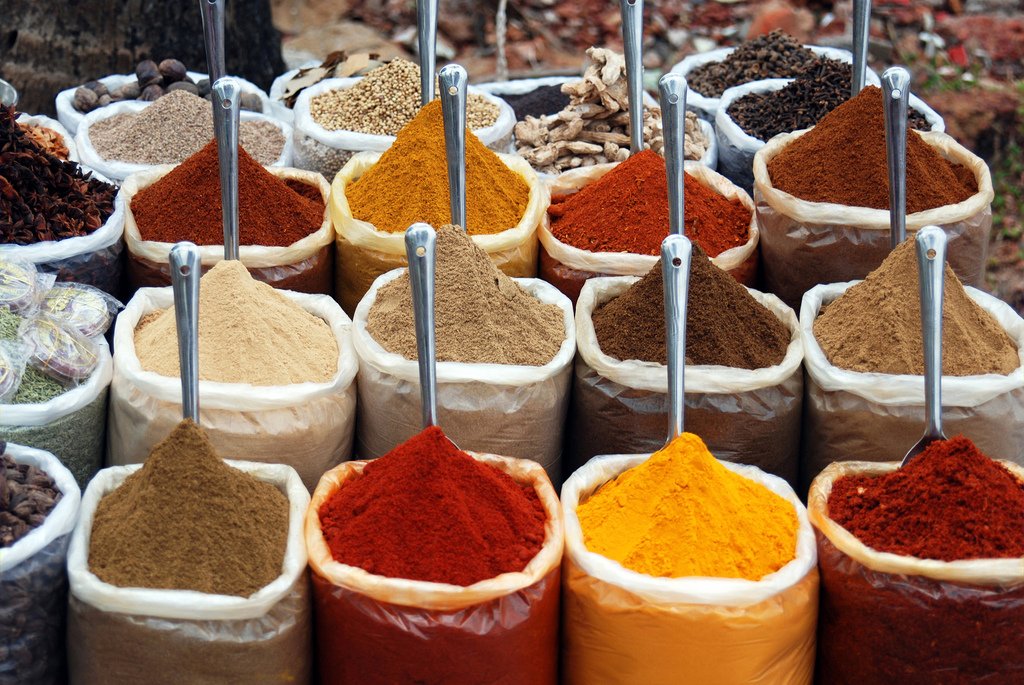
Indian Spices Photo by sara marlowe
There is a long short-list of spices that go into Indian recipes: coriander , cumin, turmeric, red pepper, nutmeg, mustard, saffron, cinnamon, cardamom, ginger powder, amchoor (green mango powder), paprika, mace. Other flavors are garlic, onion, and ginger, tamarind, pomegranate, and chile. Don’t think that because the chile is listed last, it is so in the spice mix. Indian food, especially in the tropical south, can be explosively hot. The chile’s heat helps cool the body, preserve the food, and some say it enhances the other flavors.
Curry seems to be a name granted by the British to any food that was spicy in an Indian-sort-of-way. It probably is a corruption of kari, which names both a leaf used in cooking and a particular method of cooking in the south. Curry powders sold outside of India tend to combine turmeric, cumin, coriander, red pepper, fenugreek, mustard seed, cinnamon, and cloves, all roasted dry and ground together.
More “authentic” Indian spice blends (masala) are garam masala (cardamom, cinnamon, cloves, and black pepper), mughal garam masala, sambaar podi, tandoori masala, vendaloo masala. Each is associated with various modes of cooking or regions, seasons, and foods. Some are hot, others cool. Some are wet, that is, they are in paste form, others are dry.
The Indian meal is made up of a main course, a side dish, and a central starch, which is the main source of calories. In the north, the starch is bread such as chapati (a flat griddle bread) or nan (a leavened bread cooked in a tandoor — a brick oven ); in the south, it is a huge mound of basmati rice. Relishes, wafers, chutneys, and other “tongue-touchers” are served in small bowls around the main dishes.
Traditionally, food is eaten by hand, though forks and spoons are also popular. Northern dishes tend to be drier, as soupy sauces are difficult to eat with bread, while southern recipes have sauces that soak into the rice. If there is a meat, it will be the main course. As so many cannot eat beef, the most common meats are lamb, goat and seafood. Dals — purées of lentils, chickpeas, mung beans, or kidney beans — can be of varying consistencies and accompany nearly every meal.
Dal is served in a small bowl alongside the meal, and is accompanied by a spoon if it is especially liquid. Appetizers are a very modern addition to the meal, and are not widely served, but a sweet rice-based pudding may end a traditional meal. Savory and sweet (really sweet) snacks are extremely popular but are unattached to mealtimes. Indians don’t normally drink alcohol with their food; ice water or a yogurt or fruit drink are common.
Some Indian Dishes
Eraichi Kolumbu (Lamb in Coconut and Fennel Sauce)
Tamil Nadu, in the southeast of India facing Sri Lanka, is the home of this lamb dish which is made fiery hot by cayenne pepper. Like many Indian recipes it begins from a spice paste, here built from fennel, coriander, turmeric, ginger and garlic. The spices, as always, are cooked before the meat is added. The lamb ends up with a rich gravy, ideal for the accompanying mound of rice.
Kadhi (Chickpea Dumplings in Yogurt Sauce)
This dish is made of deep-fried dumplings made from chickpea flour and yogurt, which are then braised in a spicy yogurt-based sauce.
Paneer Chat (Cheese Appetizer)
Paneer, a light white cheese made from curdled milk, is common in northern Punjab where dairy products are popular. For this light snack or first course, the delicate cheese is set on an aromatic bed of herbs and spices, including fresh coriander, chile, tomatoes, onions, ginger, pepper, and masala (spice blend).
Shah Jahani Biriyani (Layered Meat and Fragrant Rice)
This is another Moghul recipe. Partially cooked rices and meats are layered in a pot with various flavors such as saffron, ghee, onions, chiles, and mint. Then the whole is steamed in the oven, so that the layers release their complex and complementary flavors throughout the dish. It is then served with a garnish of nuts, raisins, and the edible decorative silver foil known as vark.
Shahi Murgh Badaami (Chicken with Creamy Almond Sauce)
Like Morrocans, the Moghuls of northern India love to cook with almonds. For this dish, pieces of chicken are sauteed lightly in oil, then braised in a thick sauce made from pureed yogurt, almonds, onions, cardamom pods, coriander seeds and red peppers.
Sorse Murghi (Chicken with Black Mustard Seeds)
The strong taste of black mustard seeds is typical of Bengali cooking from India’s northeast. For this dish, a paste of ground mustard seeds, turmeric and chile is smeared on seared chicken. The meat is then cooked until the there is a dry sauce coating it. It is served over rice.
Vindaloo
Traditionally made with pork, vindaloo is a type of cooking that originates from Goa on India’s southwest coast, formerly a Portuguese settlement (which may explain the unusual use of pork). Today, this spicy preparation is used for lamb, seafood, and even vegetables.
Meat is first marinated in cumin, mustard seeds, ginger, onion, garlic, cinnamon and cloves. It is then cooked in the distinctive and strong mustard oil, with added onion, turmeric, red pepper, and tamarind water to make a tangy sauce. If meat is used it is cooked until it easily falls from the bone.
An Indian Kitchen
The Indian kitchen is traditionally a bare room with a low wood-burning fire. There is always a flat grinding stone with its triangular mortar for spices, a deep pot with a lid, and wok-like pans for deep-frying and sautéeing. Tandoors — brick, clay-lined ovens heated to very high temperatures — are too expensive for most people to fuel and are generally restaurant-owned. Because of the heat, and the absence of refrigeration, foods are bought fresh daily.
The standard cooking fats vary from region to region, though ghee, clarified butter, is by far the most common. Vegetable ghees, made from vegetable shortening, are also available. In the south, cooks are more likely to use oils than in the north. Milk, a gift from the sacred cow to man, has many uses. It is curdled into the white cheese known as paneer, reduced to a thick sauce called rabadi, and made into yogurt called dahi. Southerners also use a great deal of coconut milk, which functions both as milk and as a fat. South Indian coconut milk curries have broadly influenced cuisines throughout Southeast Asia.
Moghul Cooking
It took only two centuries and six rulers for the Moghul empire in India to run its course–from the prince Babur’s capture of Delhi in 1526 to the death of the last true Moghul emperor, Aurangzeb, in 1707. But even this short dynasty was enough to make a strong mark on Indian culture.
The Moghuls were Persian Muslim princes, descended from both Genghis Khan and Tamburlaine, and nothing they did was anything less than glorious. They built the lavish and ambitious palace fortresses, mosques, and tombs that have become emblematic of the country, the most famous example of which is the Taj Mahal, the tomb built by Shah Jahan to honor his favorite wife, Mumtaz Mahal. At its height, the Moghul dynasty was known for its cultured tolerance, even enthusiatic support of and participation in, local customs, arts, and religions.
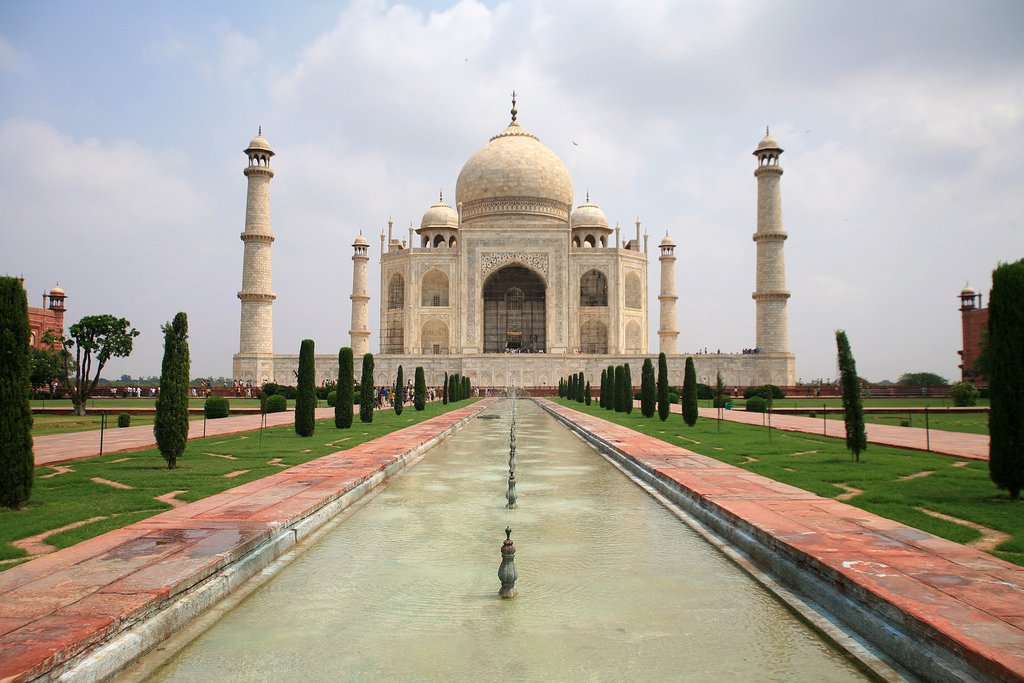
Taj Mahal Photo by laszlo-photo
It is small wonder, then, that the food served in those rose- colored stone and inlaid-marble palaces, strewn with silks and tapestries, was exceedingly lavish. Hindu cooking, with its many dietary restrictions, seemed quite austere to courtiers accustomed to the cuisine of Persia and the eastern Mediterranean, so the court cooks added liberal amounts of cream, ghee (clarified butter), yogurt, spices, raisins, and nuts to local meat dishes, pullaos (rice dishes), and samosas (savory filled pastries).
They brought their own delicacies and cooking methods, as well. The number of meat dishes were increased and often included spiced meats ground with wheat. Slowly braising meats or vegetables with a spiced yogurt and butter sauce in a tightly sealed pan–a preparation known as “dumpukht”-is associated with Moghul cuisine. They also brought their share of sweets: the rich, frozen confection known as kulfi, for example, which is made of ground almonds and pistachios, cream and sugar, and flavored with saffron or rosewater. And the jilebi, a swirl of fried pastry soaked in sugar syrup.
Many of the dishes served to the Moghuls exist almost unchanged today, and, in fact, they are often mistaken for definitive Indian cuisine by Americans whose only exposure to Indian food is at a local restaurant. But then, it is understandable that foods created to delight a jewel-bedecked king and his honored guests would go over well even today.

Hello,
You have not introduced many traditional veg & non veg menus from each state of India. India has very rich culture in food from Kashmir to Kanyakumari & Kutch to Bengal.
Just try to find out ‘Real taste of India’ in any village of India.
🙏🙏
Hi, Of course the Cuisine of India is a huge topic with so many dishes from many regions throughout this massive country. We will try to add more about Indian regional cuisine over time as it is amoong the most popular and delicious styles of cuisine in the World!